

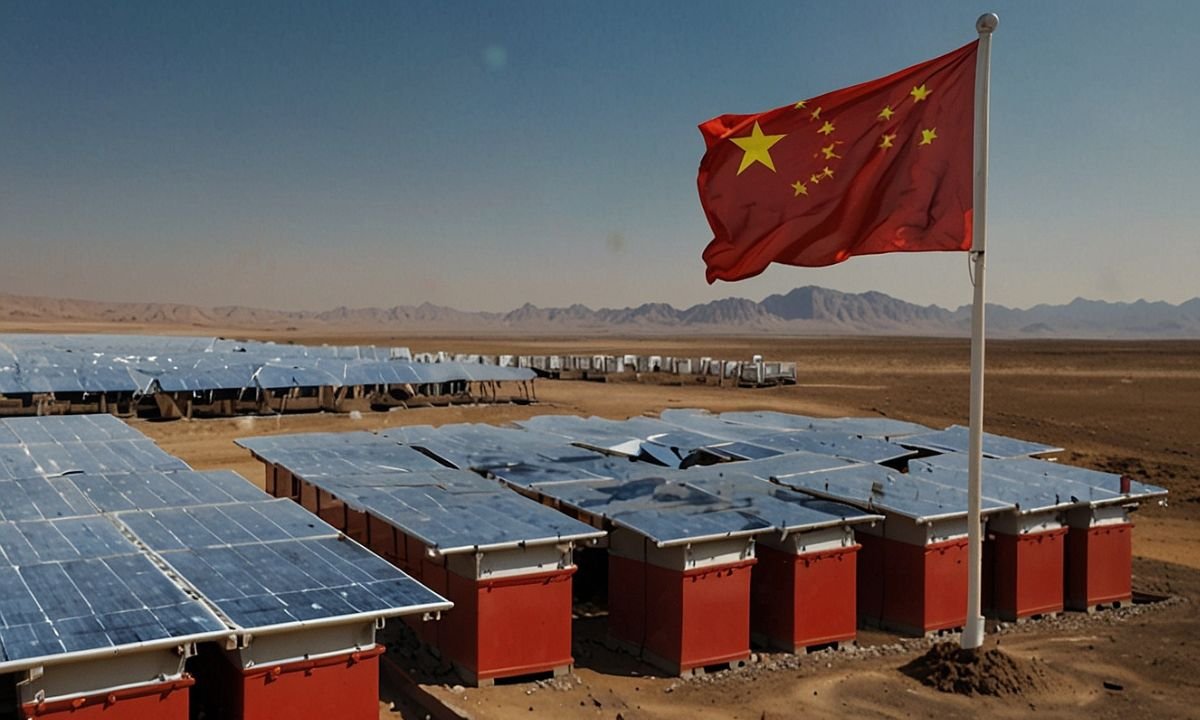
Picture this: China installs more solar and wind capacity in a single year than some countries manage in a decade, yet blackouts and curtailment still loom when the sun dips or the wind dies down. It’s a puzzle that has vexed energy planners for years. Now, Tesla’s ambitious China battery project renewable energy push is stepping in with a practical fix, one massive battery at a time.
The Shanghai Megafactory isn’t just another factory churning out hardware. It’s Tesla’s first overseas energy storage manufacturing hub, dedicated to producing Megapacks, those utility-scale lithium-ion battery systems designed to tame the chaos of intermittent power sources. Launched into production in early 2025, this facility has already shipped thousands of units, helping stabilize grids and accelerate the shift toward carbon neutrality by 2060. For energy professionals, ESG investors, and policy watchers tracking US-China clean tech ties, this project offers more than headlines. It signals a deeper convergence of innovation, policy, and market demand that’s reshaping global energy infrastructure.
You might wonder why this matters beyond the obvious green credentials. Well, let’s dig in. The tesla china battery project renewable energy initiative isn’t happening in a vacuum. It’s woven into China’s massive renewable rollout, where storage has become the missing link for reliable, scalable clean power.
Table of Contents
- The Birth of Tesla’s Shanghai Megafactory
- Decoding Megapack Technology for Grid-Scale Storage
- The $557 Million Shanghai Megapack Deal and Its Immediate Impact
- How Megapacks Tackle Intermittent Power Sources and Load Balancing
- Strategic Wins for China’s Decarbonization Goals and Energy Infrastructure
- Tesla Energy Storage Growth in China: Numbers That Tell the Story
- Pros and Cons of Utility-Grade Lithium-Ion Storage Like the Megapack
- Looking Ahead: Scaling Renewable Energy with Battery Backups Through 2025 and Beyond
- FAQ
The Birth of Tesla’s Shanghai Megafactory
Tesla didn’t stumble into China; it planted roots there years ago with its vehicle Gigafactory. But the energy storage side took a deliberate leap in 2023 when the company signed agreements to build this dedicated Megafactory in Shanghai’s Lingang Special Area. Production kicked off in February 2025, and things moved fast, almost shockingly so.
By March, the first batch of Shanghai-made Megapacks was already sailing off to Australia. Fast-forward to July, and the factory hit its 1,000th unit milestone, with that one heading to Europe. Come the end of 2025, over 2,000 systems had rolled out the door, most destined for export but with plenty earmarked for domestic use too. The plant’s annual target sits at 10,000 Megapacks, translating to roughly 40 GWh of storage capacity each year. That’s serious scale for utility-grade storage.
What makes this facility stand out isn’t just the output. It’s the localization. Tesla tapped into China’s robust supply chain for components, including advanced lithium-ion battery systems from local partners. The result? Faster production ramps and cost efficiencies that make grid-scale deployments more viable. Honestly, this isn’t talked about enough in Western coverage, but it shows how Tesla is adapting its playbook to thrive in one of the world’s most competitive manufacturing ecosystems.
Decoding Megapack Technology for Grid-Scale Storage
At its core, a single Megapack packs about 3.9 MWh of energy storage, roughly the equivalent of powering 3,600 average homes for an hour or matching the battery capacity of dozens of electric vehicles. But don’t let the numbers fool you into thinking it’s just a bigger battery. These are fully integrated systems, complete with inverters, thermal management, and sophisticated software that lets them respond to grid signals in milliseconds.
Megapack technology shines in load balancing. It charges during periods of surplus renewable generation (think sunny afternoons or windy nights) and discharges during peaks, smoothing out those wild swings that plague solar and wind farms. Frequency regulation? Handled. Blackout backup? Covered. Even arbitrage in electricity spot markets becomes possible, where operators buy low and sell high.
Tesla has deployed these worldwide, but the Shanghai Megafactory brings the tech closer to Asia’s exploding renewable markets. You might not know this, but China’s grid operators have long relied on coal plants for baseload stability. Megapacks offer a cleaner alternative, one that aligns perfectly with national targets for energy infrastructure modernization.
The $557 Million Shanghai Megapack Deal and Its Immediate Impact
In June 2025, Tesla inked a landmark agreement worth about 4 billion yuan (roughly $557 million) with the Shanghai government and China Kangfu International Leasing Co. This wasn’t some vague memorandum. It greenlit Tesla’s first grid-scale battery storage station right in Shanghai, using Megapacks produced locally at the new factory.
The project stands out as one of the largest of its kind in China. Phase one alone targets around 300 MWh of capacity, enough to ease summer and winter demand spikes in one of the world’s busiest cities. Once online, it will participate in spot trading, helping balance peak and off-peak loads while feeding excess renewable energy back into the system when needed.
For ESG investors, this deal is a textbook example of how private innovation meets public policy. It bolsters Tesla’s energy business footprint in China at a time when US-China trade tensions make every collaboration noteworthy. And for clean tech enthusiasts? It’s proof that battery storage can move from niche solution to mainstream infrastructure play.
Tesla even plans to power the Megafactory itself with a 6 MW rooftop solar array paired with an 8 MWh Megapack system. Talk about practicing what you preach, right? That self-sustaining loop underscores the project’s forward-looking ethos.
How Megapacks Tackle Intermittent Power Sources and Load Balancing
Renewables are wonderful until they’re not. Solar panels sit idle at night. Wind turbines spin erratically. Without storage, grids face curtailment (wasted clean energy) or rely on fossil backups. China’s experience with this has been instructive. As the country races toward its 2060 carbon neutrality pledge, intermittency has become a bottleneck.
Megapacks address this head-on through utility-grade storage. They act like giant shock absorbers for the grid, absorbing surges and releasing power precisely when demand spikes. Early deployments in China have already shown reductions in peak pricing volatility and improved overall reliability.
Policy analysts tracking renewable energy integration 2025 will note how this fits broader mandates. China aims to add tens of gigawatts of storage capacity annually. Tesla’s contribution, though a fraction of the total, punches above its weight because of the turnkey nature of Megapacks. Installation is quicker than traditional pumped hydro, and the systems scale modularly.
Let’s break that down with a quick analogy. Think of the power grid as a busy highway. Renewables are like unpredictable traffic surges. Megapacks are the smart traffic lights and on-ramps that keep everything flowing without jams or pileups.
Strategic Wins for China’s Decarbonization Goals and Energy Infrastructure
Beyond the hardware, Tesla’s China battery project renewable energy push carries geopolitical and economic weight. It strengthens supply chain resilience for both sides while advancing shared decarbonization goals. China leads global renewable deployment, but reliable integration demands massive storage. Tesla brings proven technology and software expertise; China offers scale and policy support.
Some experts disagree on the long-term dominance of any single player in this space, but here’s my take: partnerships like this accelerate the transition faster than any one nation could alone. Tesla’s energy storage growth in China isn’t just about sales. It’s about embedding lithium-ion battery systems into the fabric of national energy strategy.
The benefits ripple outward. Local jobs in manufacturing, reduced reliance on imported fossil fuels, and enhanced energy security all factor in. For global observers, it demonstrates how US tech can coexist productively in China’s market despite broader tensions.
Tesla Energy Storage Growth in China: Numbers That Tell the Story
The momentum is real. Tesla expects its overall energy business to grow more than 50 percent year-over-year in 2025, with the Shanghai Megafactory playing a starring role. Exports from the plant have already boosted Shanghai’s battery shipment figures noticeably.
Deployments span Asia-Pacific and Europe, but domestic projects like the $557 million station signal deeper roots. As China pushes its energy storage market toward trillions in value over the coming decade, Tesla is positioning itself as a key enabler.
Pros and Cons of Utility-Grade Lithium-Ion Storage Like the Megapack
To keep things balanced (because no technology is perfect), here’s a clear-eyed look at how Megapacks stack up:
Pros:
- Rapid deployment: Weeks or months versus years for alternatives.
- High efficiency and responsiveness for frequency regulation and load balancing.
- Modular scalability suits everything from small microgrids to massive utility projects.
- Software integration enables smart grid participation and revenue from energy trading.
- Supports decarbonization by maximizing renewable utilization and cutting curtailment.
Cons:
- Upfront capital costs remain higher than some legacy options, though falling fast.
- Finite lifespan (typically 15-20 years with proper management) requires eventual replacement.
- Dependence on lithium supply chains, though Tesla mitigates this through diversification and local sourcing.
- Environmental concerns around mining, though recycling programs are advancing quickly.
Overall, the pros dominate for markets like China where speed and flexibility are paramount. Traditional solutions like pumped hydro still have their place for ultra-long-duration storage, but Megapacks excel where quick response and urban siting matter.
Looking Ahead: Scaling Renewable Energy with Battery Backups Through 2025 and Beyond
Tesla’s Shanghai expansion isn’t a one-off. It sets a template for how battery storage can underpin renewable energy integration worldwide. With production ramping and more deals likely, we could see additional grid-scale projects in other Chinese cities soon.
The bigger picture? Energy infrastructure is evolving from rigid, centralized systems to flexible, decentralized networks. Megapack technology, produced at scale in China, helps make that shift affordable and reliable. For policy analysts, the lesson is clear: cross-border collaboration on clean tech delivers results that pure competition sometimes can’t.
Some might view this through a narrow trade lens, but I see it as a pragmatic step toward global transformation. The tesla china battery project renewable energy story is still unfolding, yet its early chapters already point to a more resilient, lower-carbon future.
FAQ
What exactly is Tesla’s Shanghai Megafactory? It’s Tesla’s first dedicated energy storage factory outside the US, located in Shanghai’s Lingang area. Opened for production in February 2025, it manufactures Megapacks at a rate of up to 10,000 units annually, delivering about 40 GWh of grid-scale storage capacity each year.
How do Megapacks help with China’s renewable energy challenges? They store excess power from solar and wind during high-generation periods and release it during peaks. This improves grid stability, reduces waste from intermittent sources, and supports load balancing across utility networks.
What was the $557 million Shanghai Megapack deal about? Signed in June 2025, it funds Tesla’s first large-scale grid battery storage station in China. The project uses locally produced Megapacks to provide hundreds of MWh of capacity, aiding peak demand management and renewable integration in Shanghai.
Will Tesla’s China battery project benefit global markets? Absolutely. Most early output has gone to export markets like Australia and Europe. The factory’s scale helps lower costs worldwide while proving the technology in one of the toughest grid environments.
How does this align with China’s carbon neutrality 2060 target? By enabling higher renewable penetration without compromising reliability, Megapacks cut the need for coal backups. They directly support decarbonization goals and modern energy infrastructure development.
Are there risks to relying on lithium-ion systems for utility-grade storage? Like any tech, there are trade-offs around raw material sourcing and lifecycle management. However, Tesla’s closed-loop recycling efforts and performance data from global deployments continue to address these concerns effectively.
What’s next for Tesla energy storage growth in China? Expect more domestic projects, continued exports, and potential expansions as the market scales. The 2025 production milestones suggest sustained momentum into 2026 and beyond.
In the end, Tesla’s China battery project renewable energy effort reminds us that the clean energy transition isn’t about grand gestures alone. It’s about practical engineering, smart policy alignment, and relentless scaling. This Megafactory isn’t the final chapter, but it might just be the one that proves storage can keep pace with ambition. What do you think the next big storage breakthrough will look like? The grid is waiting to find out.
 Rotary Eco Club